
Umrah is the same act of worship for women as it is for men, the same four steps, the same rewards. But there are a handful of important differences women should understand before travelling, from what to wear in Ihram to the rules around menstruation and travelling companions. This guide answers the questions female pilgrims ask most, so you can prepare with confidence. Read it alongside our pillar guide on how to perform Umrah.
Ihram for women: what to wear
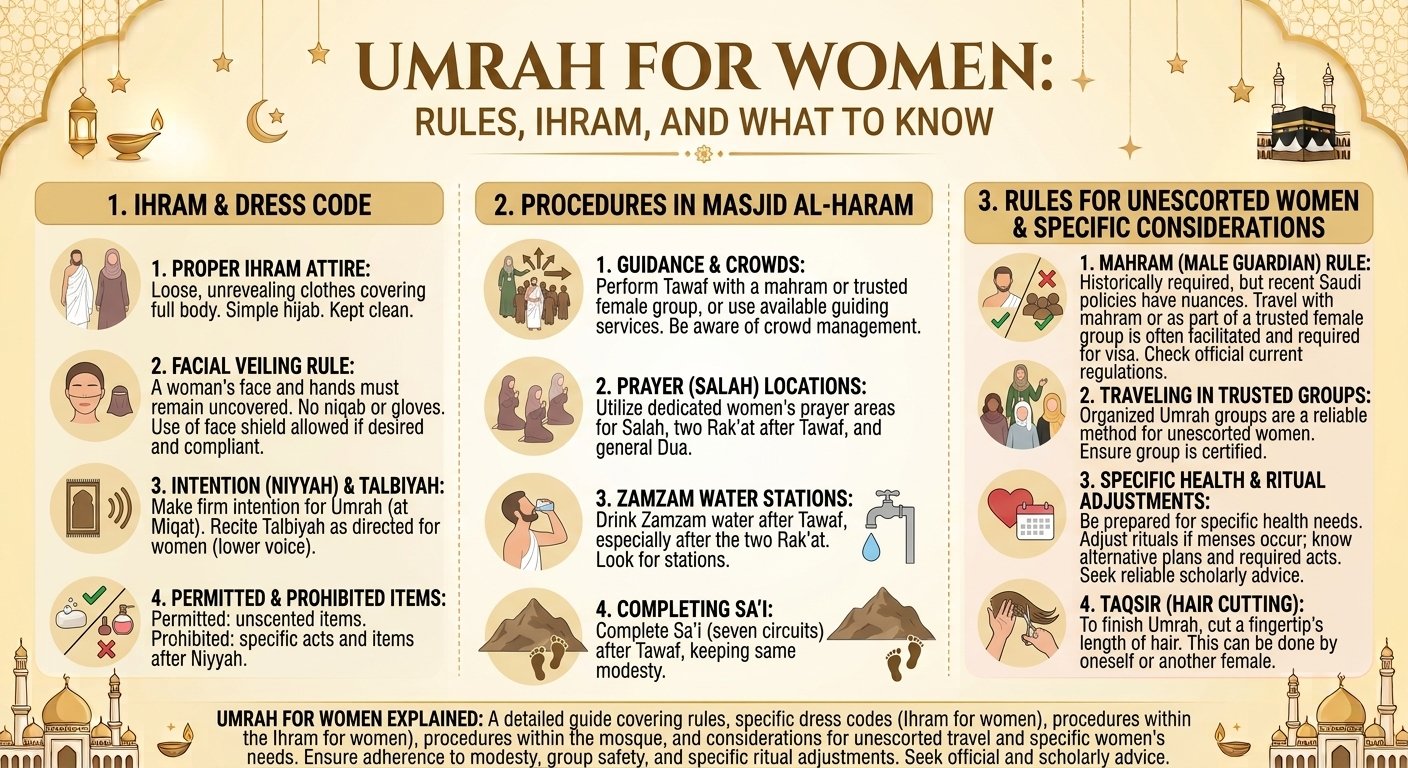
There is no fixed Ihram dress for women. Unlike men, who wear two white unstitched sheets, a woman wears ordinary modest clothing of any plain colour, so long as it covers her properly and does not draw attention. Her hands and face are usually left uncovered during the rituals, though she may cover her face loosely from non-mahram men when needed. Many scholars advise against a fitted niqab or gloves while in Ihram. Enter Ihram the same way as everyone: make ghusl, form the intention, and recite the Talbiyah, though a woman recites it softly rather than aloud. The full process is in our guide on how to enter Ihram.
The Mahram requirement
Traditionally, a woman travelling for Umrah is accompanied by a mahram (a husband or close male relative she cannot marry). In recent years, Saudi Arabia has changed its entry arrangements, and many women now travel in organised groups. Because these rules have shifted and can change again, confirm the current requirement before you book. We cover the details, and the women’s group option, in solo Umrah for women and the Mahram rule.
Umrah during menstruation
A woman on her period can still travel, enter Ihram, make the intention and recite the Talbiyah, she simply cannot perform Tawaf until she is pure, because Tawaf requires ritual purity. She may do everything else, including Sa’i, once Tawaf is complete. Practically, many women plan their trip dates around their cycle where possible, or speak to a doctor about options. If your period begins after you enter Ihram, remain patient and wait; you stay in Ihram until you can complete Tawaf.
Ritual differences for women
- The Talbiyah and duas are recited quietly, not aloud.
- Women do not perform Ramal (the brisk walk) in the first circuits of Tawaf.
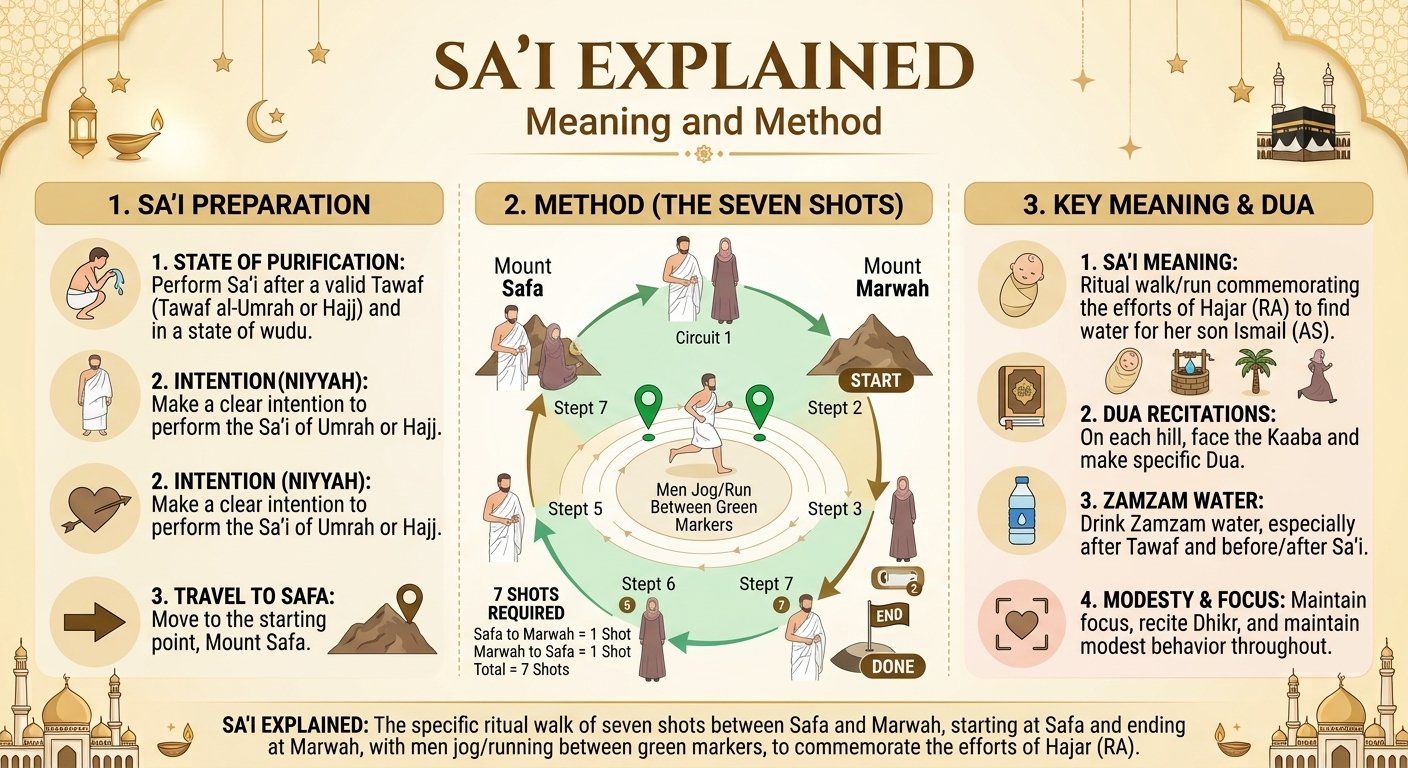
- Women do not jog between the green markers during Sa’i; they walk at a normal pace.
- For Halq or Taqsir, a woman trims about a fingertip’s length from the ends of her hair; she never shaves.
Practical tips for women pilgrims
- Pack loose, breathable abayas and comfortable, broken-in walking shoes.
- Carry personal care items and any medication in your hand luggage.
- Choose a hotel close to the Haram to reduce long walks, especially useful in the heat.
- Stay with your group, keep a copy of your documents, and agree a meeting point in case you are separated.
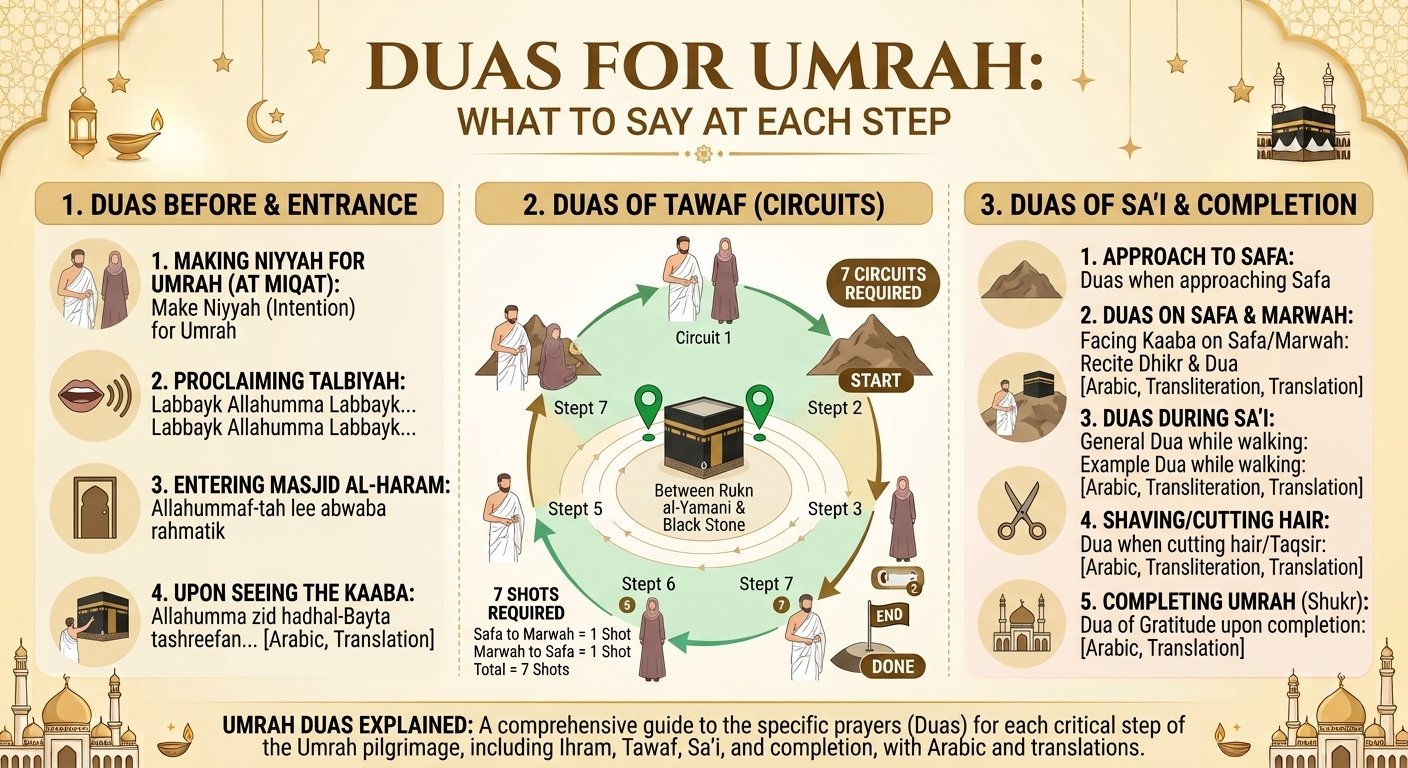
- Keep a written list of duas; the Haram is a blessed place to supplicate. See duas for Umrah.
Frequently asked questions
Can a woman perform Umrah without a Mahram?
Saudi entry arrangements have changed in recent years and many women travel in organised groups. Confirm the current rule before booking, as it can change.
What do women wear for Ihram?
Ordinary modest clothing of any plain colour that covers properly; there is no fixed Ihram dress for women. The Talbiyah is recited softly.
What if my period starts during Umrah?
You remain in Ihram and simply delay Tawaf until you are pure. You can still make intention, recite the Talbiyah and wait patiently.
Do women shave their hair after Umrah?
No. Women trim about a fingertip’s length from the ends of their hair; shaving is only for men.