

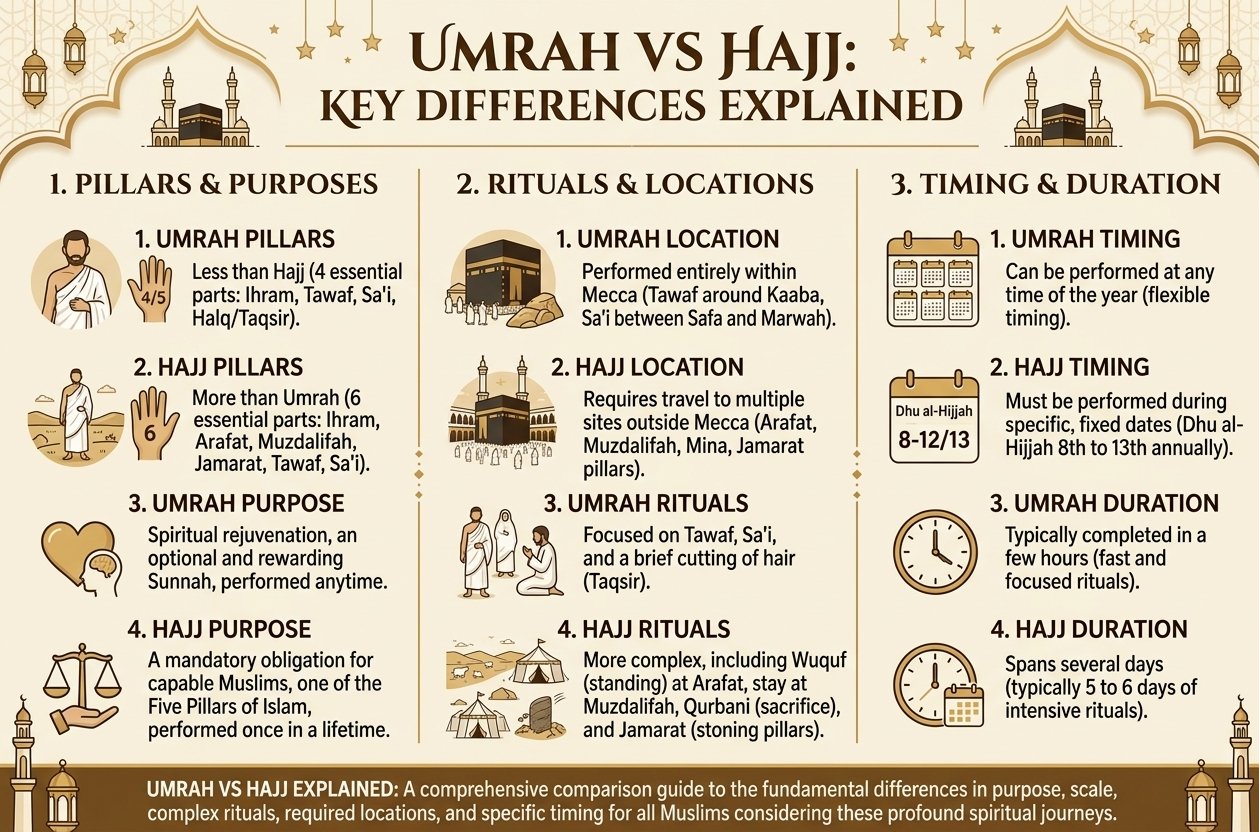
Umrah and Hajj are both sacred journeys to Makkah, and both are important acts of worship in Islam. Because they share some rituals, people sometimes use the two terms as if they mean the same thing. However, Hajj and Umrah are different pilgrimages with different rules, timings and requirements.
Understanding the difference between Hajj and Umrah can help you prepare properly and choose the journey that fits your circumstances. Hajj is the major pilgrimage and one of the five pillars of Islam, while Umrah is a separate pilgrimage that can usually be performed throughout the year.
In this guide, we explain Umrah vs Hajj in simple terms, including their obligation, timing, rituals, duration, cost and how to think about which pilgrimage to perform first.
What Are Hajj and Umrah?
Hajj is the major pilgrimage to Makkah and is the fifth pillar of Islam. It is performed during specific days of the Islamic month of Dhul Hijjah. It includes several important rites that take place in Makkah and the surrounding holy sites, including Mina, Arafat and Muzdalifah.
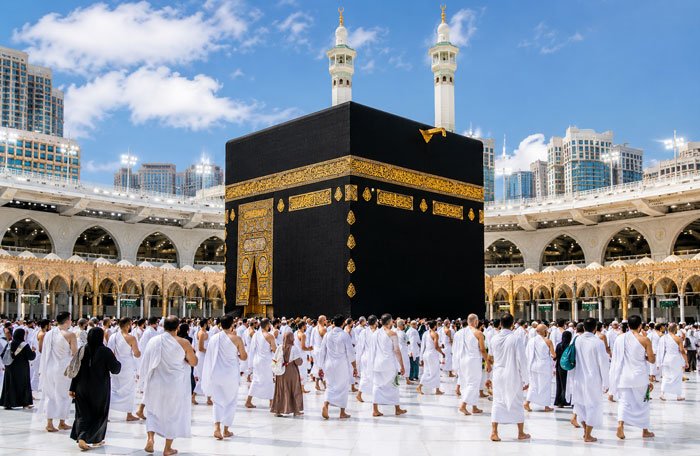
Umrah is often called the “lesser pilgrimage.” It is also performed in Makkah and includes some of the same basic acts of worship as Hajj. These include entering Ihram, performing Tawaf around the Kaaba and completing Sa’i between Safa and Marwah. After these rites, the pilgrim cuts or shaves the hair to complete Umrah.
The main difference is that Umrah is much shorter and has fewer rituals, while Hajj includes additional rites that take place over several days.
If you want to understand the complete process, see our guide on how to perform Umrah.
Is Hajj More Obligatory Than Umrah?
One of the most important differences between Hajj and Umrah is their religious status.
Hajj is obligatory once in a person’s lifetime for an adult Muslim who is physically and financially able to perform it and meets the relevant conditions. This is why Hajj has a special position in Islam as one of the five pillars.
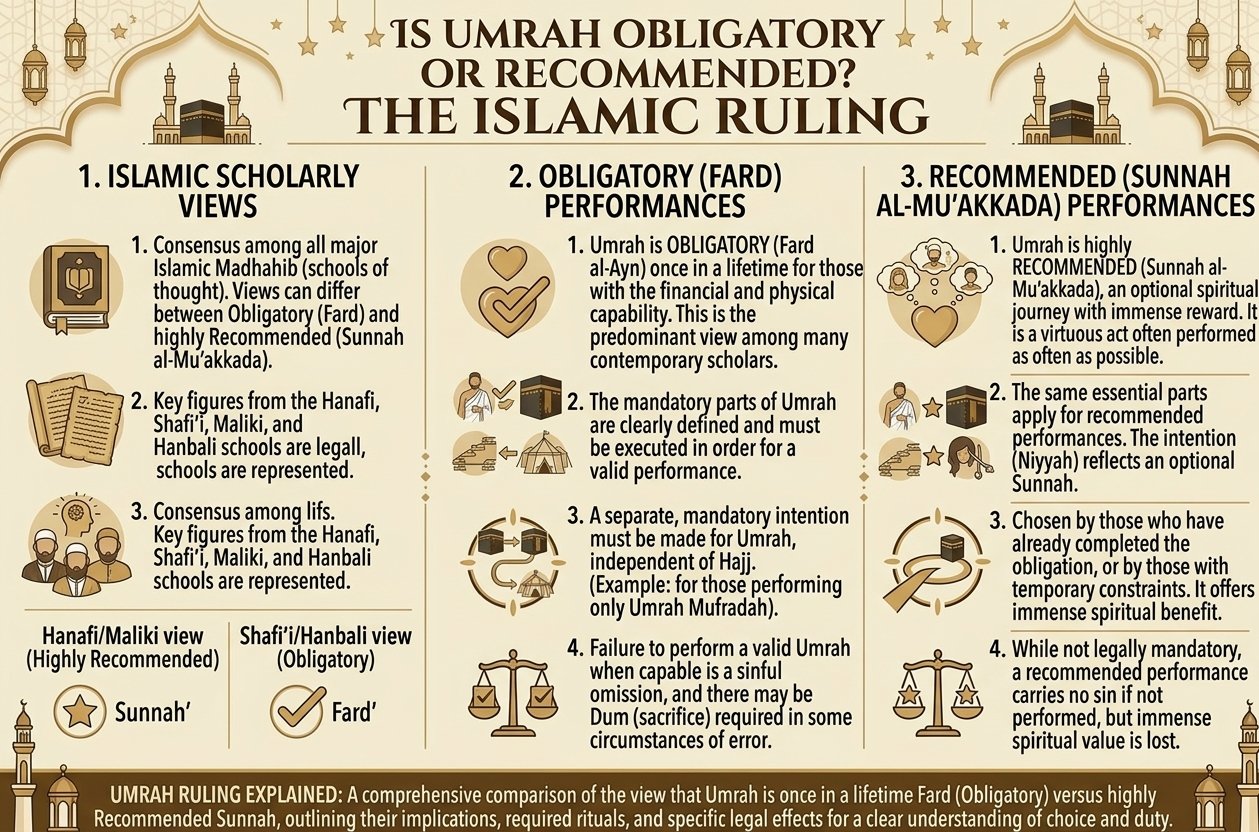
The ruling on Umrah is different. Umrah is highly recommended, but scholars have different views about whether it is obligatory once in a lifetime. Some scholars consider it obligatory under certain conditions, while others consider it a strongly recommended act of worship.
Because of these differences in scholarly opinion, it is better to understand the ruling according to the school of thought or qualified scholar you follow.
When Can You Perform Hajj and Umrah?
Timing is another major difference between Hajj and Umrah.
Hajj can only be performed during a specific period of the Islamic calendar. Its main rites take place during the month of Dhul Hijjah, particularly from the 8th to the 13th of Dhul Hijjah. Because Hajj takes place during a fixed period, millions of Muslims travel to Makkah at around the same time.
Umrah offers much more flexibility. It can generally be performed throughout the year, except for specific restrictions related to the Hajj season and official arrangements.
This flexibility allows people to choose dates based on their work, family commitments, budget and travel plans. Some periods can be especially busy, while other times may provide a quieter experience.
If you are deciding when to travel, read our guide to the best time to perform Umrah.
Umrah vs Hajj: Rituals Compared
Although Hajj and Umrah share some important rituals, the complete process is not the same.
Main Umrah rituals
Umrah is relatively simple compared with Hajj. The main steps include:
- Entering Ihram – The pilgrim enters the state of Ihram and makes the intention for Umrah.
- Tawaf – The pilgrim goes around the Kaaba seven times.
- Sa’i – The pilgrim walks between Safa and Marwah seven times.
- Halq or Taqsir – The pilgrim shaves or cuts the hair to complete Umrah.
Once these steps are completed, the Umrah is finished.
Depending on the circumstances, the actual Umrah rituals can be completed within a few hours. However, the complete trip may last much longer if the pilgrim also visits Madinah or spends additional time in Makkah.
Main Hajj rituals
Hajj includes the basic pilgrimage rituals as well as several additional rites.
Depending on the type of Hajj being performed, the pilgrim enters Ihram and then takes part in rites that include:
- Travelling to Mina
- Standing at Arafat
- Spending time at Muzdalifah
- Stoning the Jamarat
- Offering a sacrifice where required
- Performing Tawaf al-Ifadah
- Performing Sa’i where required
- Completing the final rites and leaving Ihram according to the Hajj process
The main Hajj rites are spread over several days, particularly from the 8th to the 13th of Dhul Hijjah.
This makes Hajj more physically demanding and requires more planning than Umrah.
How Long Does Umrah Take Compared With Hajj?
The difference in duration is another important point when comparing Umrah or Hajj.
Umrah itself can usually be completed in a few hours if the pilgrim is able to perform all the rituals without long delays. However, most people travel for several days or one to two weeks so they have enough time for worship, rest and visits to the holy sites.
Many Umrah travellers also visit Madinah as part of their overall Saudi Arabia trip. Visiting Madinah is not a required part of Umrah, but many pilgrims choose to go there to visit the Prophet’s Mosque and other important places.
Hajj takes longer because its main rites are connected to specific days and locations. Pilgrims travel between Makkah, Mina, Arafat and Muzdalifah as part of the pilgrimage.
Hajj can also be physically demanding because of the large crowds, walking and long periods spent outdoors. For this reason, proper preparation is important.
Which Is More Expensive: Hajj or Umrah?
Cost is another common question when people compare Umrah vs Hajj.
Umrah is generally more affordable because the pilgrimage itself is shorter and can be planned during different times of the year. Travellers can often choose from different accommodation, flight and package options depending on their budget.
The total cost can still vary considerably based on factors such as:
- Travel dates
- Flight prices
- Hotel location
- Number of days
- Room type
- Transport arrangements
- Distance from the Haram
- Additional services included in the package
Hajj is usually more expensive because it involves a fixed pilgrimage period, high demand, several days of organised rites and additional arrangements. Availability and official Hajj regulations can also affect the overall cost.
If you are comparing available travel options, you can explore our Umrah packages and Hajj packages.
Umrah vs Hajj: A Simple Comparison
| Difference | Umrah | Hajj |
|---|---|---|
| Religious status | Highly recommended; scholars differ on its obligation | Obligatory once for those who are able |
| Timing | Generally throughout the year | Specific days of Dhul Hijjah |
| Duration | Usually much shorter | Takes several days |
| Main location | Makkah | Makkah and surrounding holy sites |
| Main rituals | Ihram, Tawaf, Sa’i and Halq/Taqsir | Includes Umrah-like rites plus additional Hajj rites |
| Physical demand | Generally less demanding | Generally more physically demanding |
| Cost | Generally more affordable | Generally more expensive |
| Flexibility | More flexible | Limited to the Hajj season |
This table gives a simple overview, but the exact requirements can depend on the type of Hajj, the pilgrim’s circumstances and the guidance they follow.
Which Should You Do First: Hajj or Umrah?
There is no single answer that applies to every person.
Many Muslims choose to perform Umrah before Hajj because Umrah is shorter and gives them an opportunity to become familiar with the Holy Cities and some of the pilgrimage rituals. It can also help a person understand what to expect when travelling for a larger pilgrimage.
Others may focus on Hajj as their priority because it is an obligation for Muslims who meet the required conditions.
Your decision may depend on your financial situation, health, available time, travel arrangements and religious circumstances. If you are unsure about the religious ruling that applies to you, speaking with a trusted and qualified scholar can help.
The important thing is to prepare properly, understand the rituals and make arrangements according to your circumstances.
Can You Perform Umrah and Hajj on the Same Trip?
Yes. It is possible to perform Umrah and Hajj during the same trip in certain forms of Hajj.
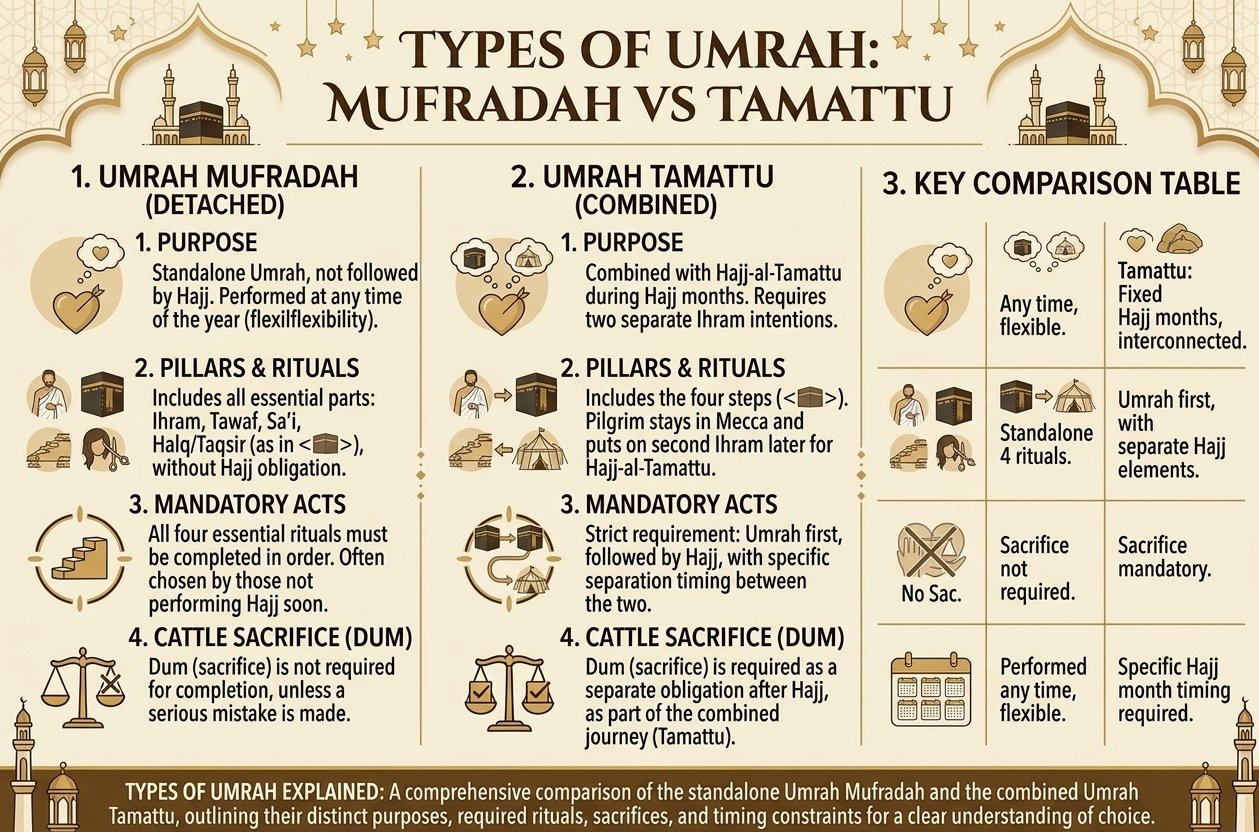
For example, in Hajj Tamattu’, a pilgrim performs Umrah during the Hajj season and then exits Ihram. Later, the pilgrim enters Ihram again for Hajj and completes the Hajj rites.
This is one reason why some people perform both Umrah and Hajj during the same journey.
However, the rules and details can vary depending on the type of Hajj being performed. Pilgrims should learn the correct procedure before travelling and follow reliable religious guidance.
Final Thoughts on Umrah vs Hajj
The main hajj and umrah difference is that they are separate pilgrimages with different timings, rituals and requirements.
Hajj is the major pilgrimage and one of the five pillars of Islam. It takes place during specific days of Dhul Hijjah and includes several rites over multiple days. Umrah is a shorter pilgrimage that can generally be performed throughout the year and includes Ihram, Tawaf, Sa’i and hair cutting or shaving.
If you are considering Umrah, understanding the rituals and planning your journey in advance can make the experience easier. If you are preparing for Hajj, the additional rites and fixed schedule mean that careful preparation is even more important.
Whichever journey you are preparing for, learning the requirements beforehand can help you travel with greater confidence and focus on your worship.
Frequently Asked Questions
Is Umrah compulsory like Hajj?
Hajj is obligatory once in a lifetime for an adult Muslim who is physically and financially able to perform it and meets the relevant conditions. Umrah is highly recommended, while scholars differ on whether it is obligatory once in a lifetime. For this reason, Muslims should follow the guidance of a qualified scholar or the school of thought they follow.
Can you do Umrah and Hajj together?
Yes. Umrah and Hajj can be performed during the same trip in certain forms of Hajj, including Hajj Tamattu’. In this case, the pilgrim performs Umrah first and then performs Hajj during the Hajj period.
Which is cheaper, Hajj or Umrah?
Umrah is generally cheaper because it is shorter and offers more flexibility with travel dates and accommodation. Hajj is usually more expensive because it takes place during a fixed period and includes several days of organised pilgrimage rites. The actual price depends on flights, hotels, travel dates, transport and the services included in the package.
How many days does Umrah take?
The Umrah rituals themselves can often be completed within a few hours. However, many travellers stay in Saudi Arabia for one to two weeks or longer so they have time for worship, rest and visits to Makkah and Madinah.
Can Umrah be performed at any time?
Umrah can generally be performed throughout the year, although there are specific restrictions and official arrangements around the Hajj season. Travellers should check the current Saudi requirements and travel rules before booking.
Is Hajj harder than Umrah?
Hajj generally involves more rituals, more days and more movement between different holy sites. The large number of pilgrims during Hajj also means that it can be physically demanding. Umrah is shorter and has fewer rituals, although it can still require significant walking and physical effort.
Do you have to visit Madinah during Umrah?
No. Visiting Madinah is not a required part of Umrah. Many pilgrims choose to visit Madinah and the Prophet’s Mosque during their trip, but Umrah itself is performed in Makkah.
Plan Your Pilgrimage
Understanding the difference between Hajj and Umrah is an important first step when planning your journey. Once you know which pilgrimage you are preparing for, you can focus on learning the rituals, choosing suitable travel dates and arranging accommodation and transport.
Explore our Umrah packages or Hajj packages to learn more about the travel options available for your pilgrimage.

One Response