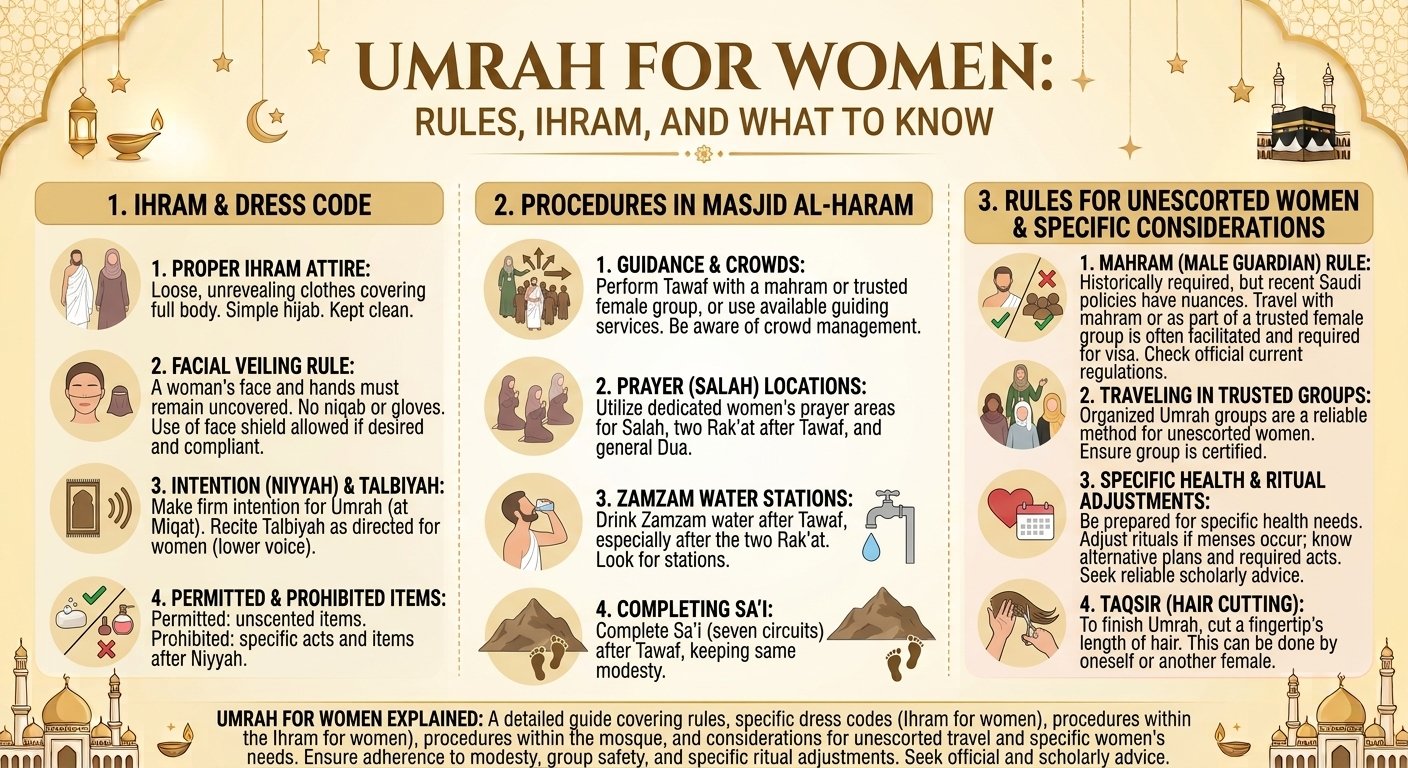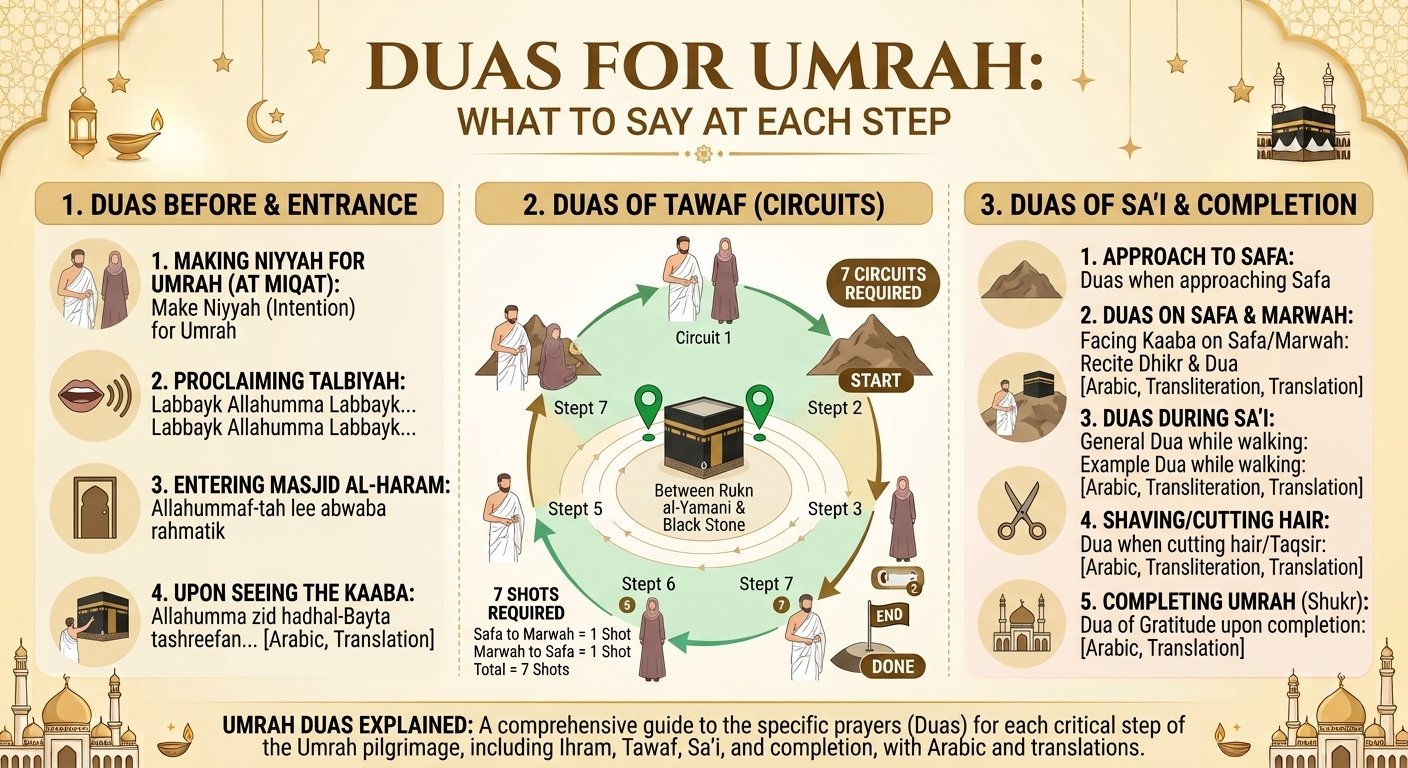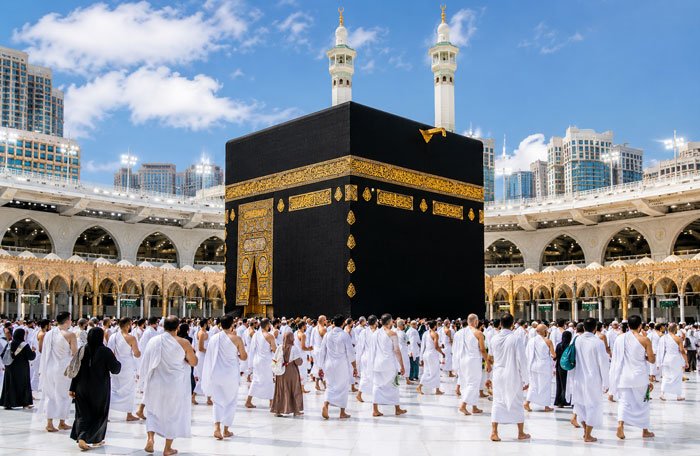

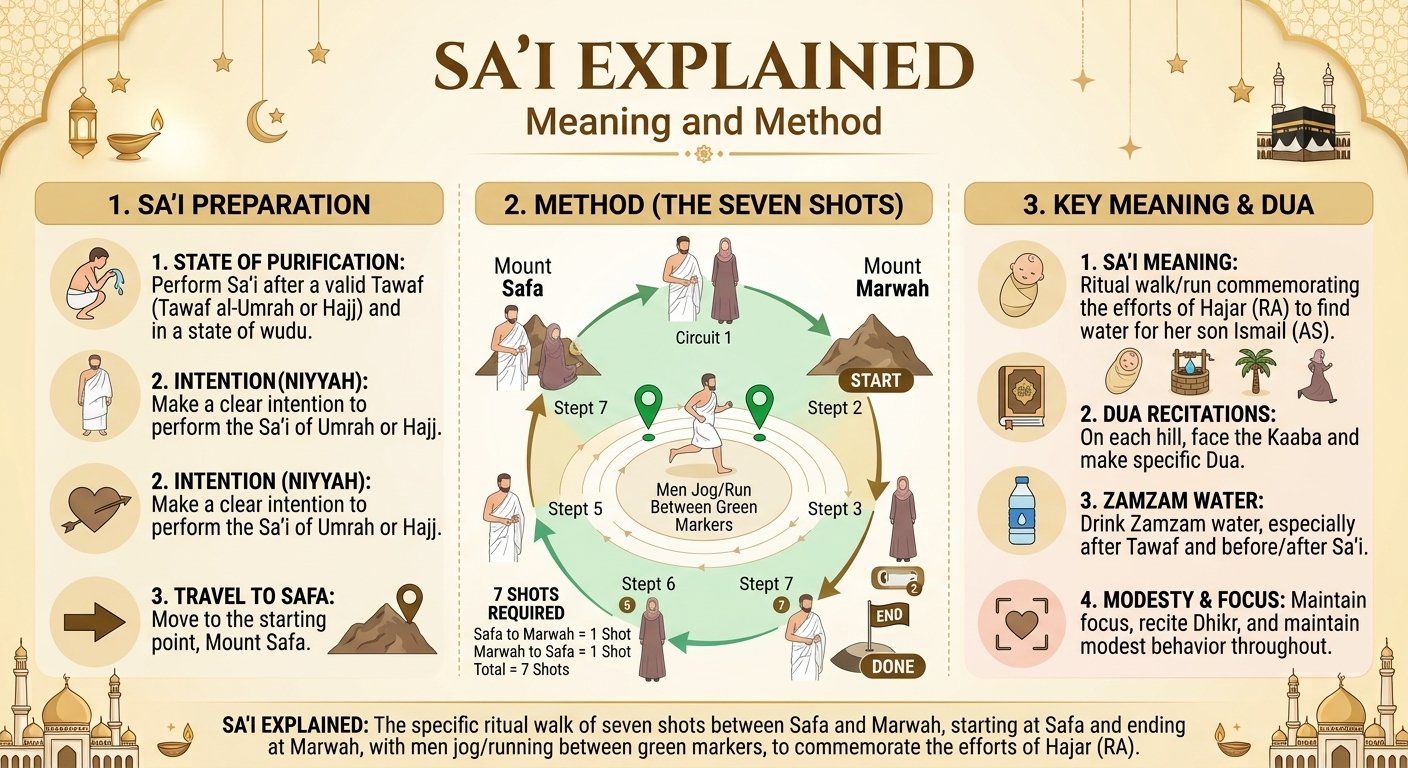
Sa’i, walking seven times between the hills of Safa and Marwah, is the third step of Umrah, and one of the most moving. Every step retraces the footsteps of Hajar, the mother of Ismail, as she ran between these hills searching for water for her child. This guide explains the meaning behind Sa’i and the exact method, so you can perform it correctly and with a full heart.
The story behind Sa’i
When Prophet Ibrahim left Hajar and their infant son Ismail in the barren valley of Makkah by Allah’s command, their water ran out. Desperate, Hajar climbed the hill of Safa to look for help, then ran to Marwah, back and forth seven times, trusting in Allah. It was then that the spring of Zamzam burst forth at the feet of baby Ismail. Sa’i is our re-enactment of her patience, effort and complete reliance on Allah. Understanding this turns a physical walk into an act of deep worship. You can read the full account in our post on the story of Safa and Marwah.
When is Sa’i performed?
Sa’i comes immediately after Tawaf and the two rak’ah at Maqam Ibrahim. If you have not yet performed Tawaf, see how to perform Tawaf correctly first, then return to complete Sa’i. Unlike Tawaf, Sa’i does not require wudu, though remaining in a state of purity is better.
How to perform Sa’i step by step
- Go to the hill of Safa. As you approach, it is Sunnah to recite: “Innas-safa wal-marwata min sha’a’irillah” (“Indeed, Safa and Marwah are among the symbols of Allah”), then say “Abda’u bima bada’allahu bihi” (“I begin with what Allah began with”).
- Climb Safa, face the Kaaba, raise your hands, praise Allah, say the takbir and make dua. It is Sunnah to repeat this three times.
- Walk toward Marwah. This is your first circuit.
- Between the two green markers, men walk briskly (a light jog); women walk normally.
- At Marwah, face the Kaaba, praise Allah and make dua as you did at Safa. This completes the second circuit.
- Continue back and forth until you have completed seven circuits, Safa to Marwah is one, Marwah to Safa is two, and so on, ending at Marwah.
After Sa’i: Halq or Taqsir
Once you finish the seventh circuit at Marwah, only one step of Umrah remains: cutting the hair. Men shave (Halq) or trim (Taqsir), and women trim about a fingertip’s length. With that, you leave Ihram and your Umrah is complete. See the full sequence in our pillar guide, how to perform Umrah.
Duas during Sa’i
There is no single obligatory dua for each circuit of Sa’i. Make sincere personal supplication in any language, remembering Hajar’s trust in Allah. For recommended supplications at Safa, Marwah and throughout, see duas for Umrah.
Common Sa’i mistakes
- Starting at Marwah instead of Safa; Sa’i must begin at Safa.
- Miscounting the seven circuits, remember it ends at Marwah, not Safa.
- Men running the entire distance rather than only between the green markers.
- Rushing without dua or reflection, missing the spirit of the ritual.
Frequently asked questions
Why do we walk between Safa and Marwah?
Sa’i re-enacts Hajar’s search for water for her son Ismail and her trust in Allah, which was answered by the spring of Zamzam.
How many circuits is Sa’i?
Seven. Safa to Marwah is the first, Marwah to Safa the second, and so on, ending at Marwah.
Do women run during Sa’i?
No. Only men jog lightly between the two green markers; women walk normally throughout.
Does Sa’i require wudu?
It is better to be in a state of purity, but Sa’i does not strictly require wudu the way Tawaf does.